


Cancer researchers from one of the world’s oldest institutes have extended strike action over pay and claimed it is in “existential crisis” with some staffers getting “poorer” the longer they stay.
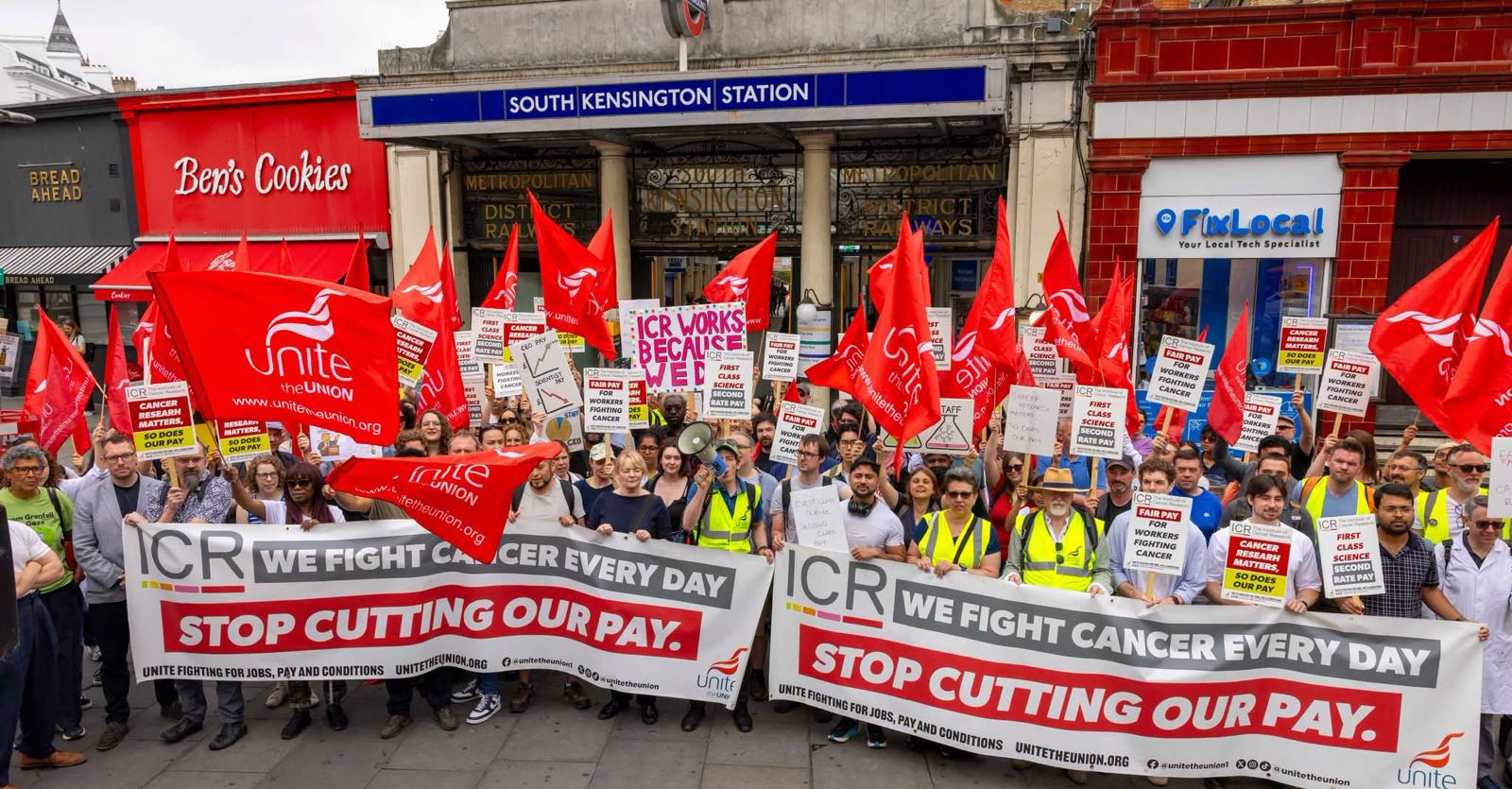
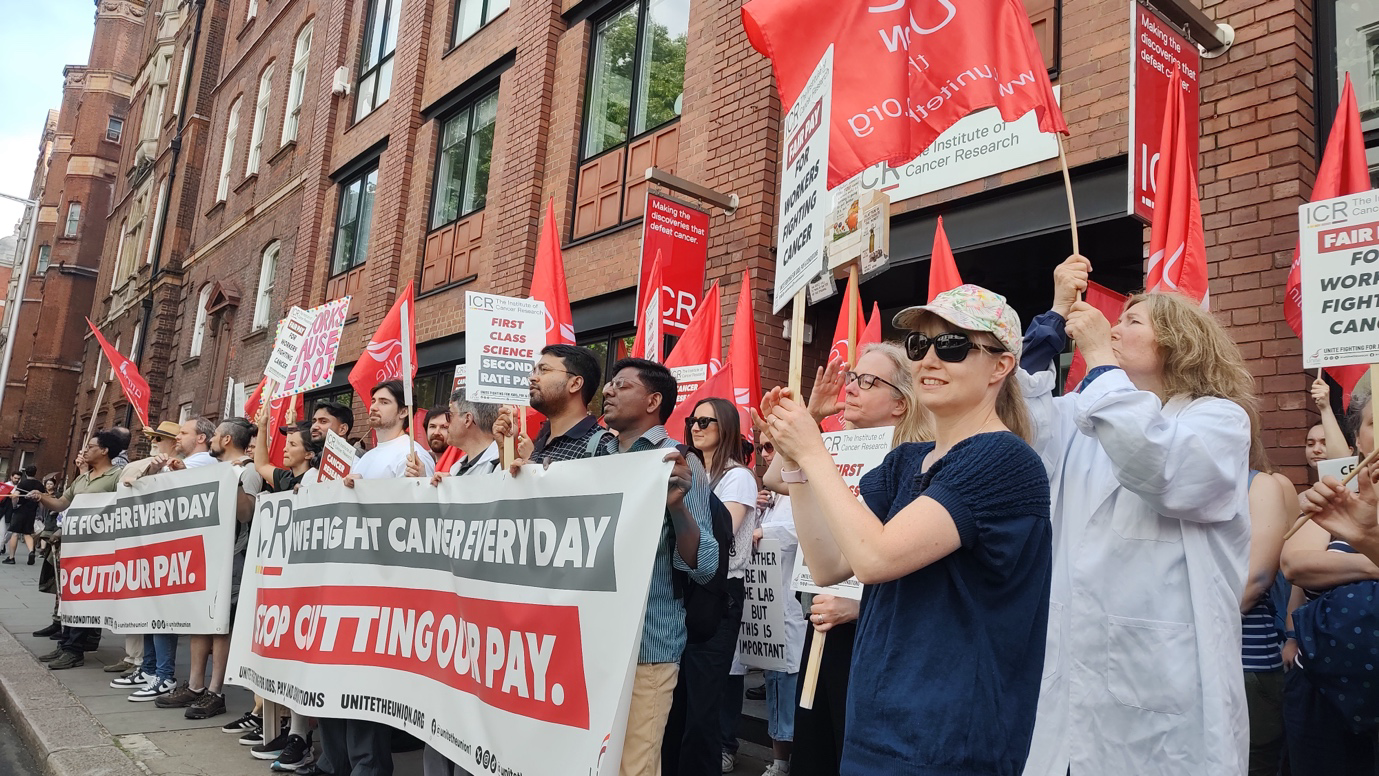
Staff from the Institute of Cancer Research (ICR) including researchers, porters, maintenance and administrative staff, have taken industrial action for the first time in 117 years over pay.
The institute has been behind a series of major scientific breakthroughs, including developing the first treatment for advanced prostate cancer, Abiraterone, which has been available on the NHS since 2012.
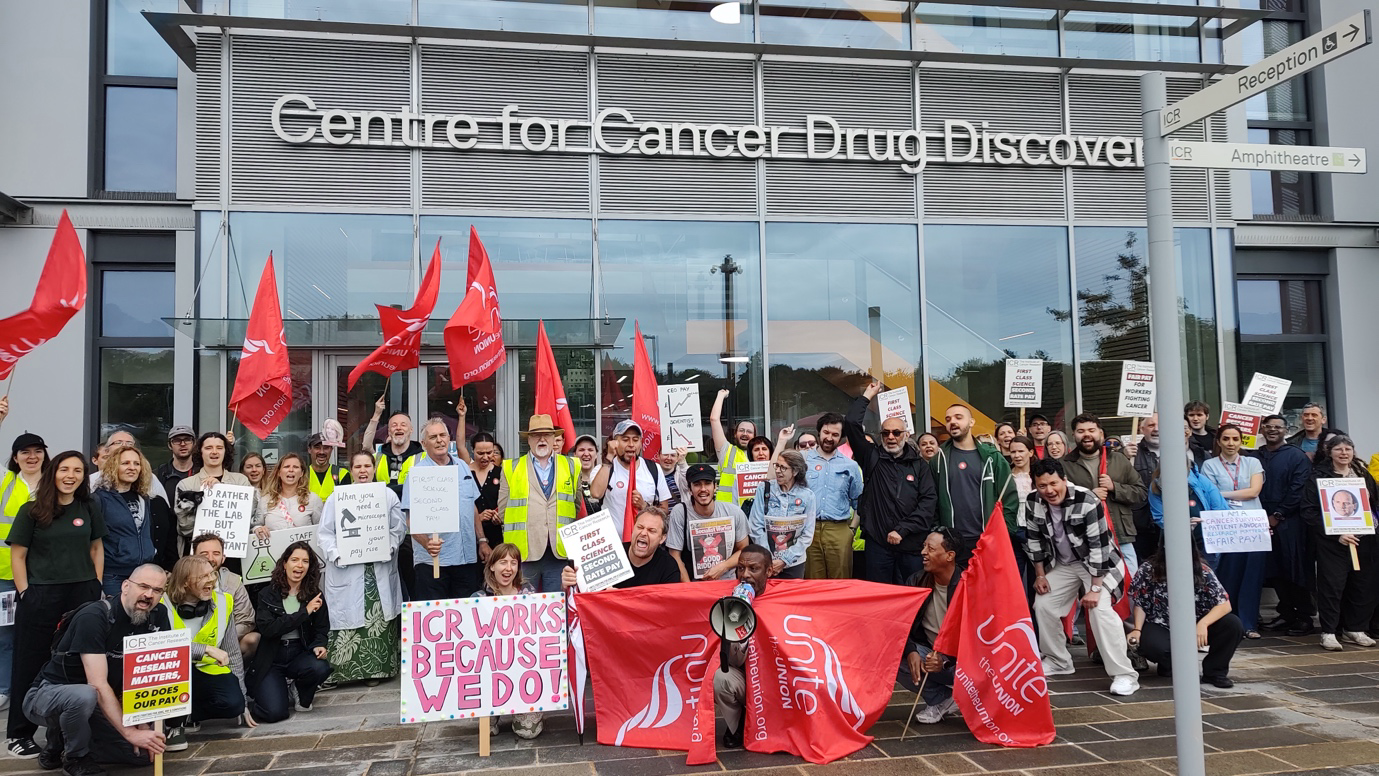
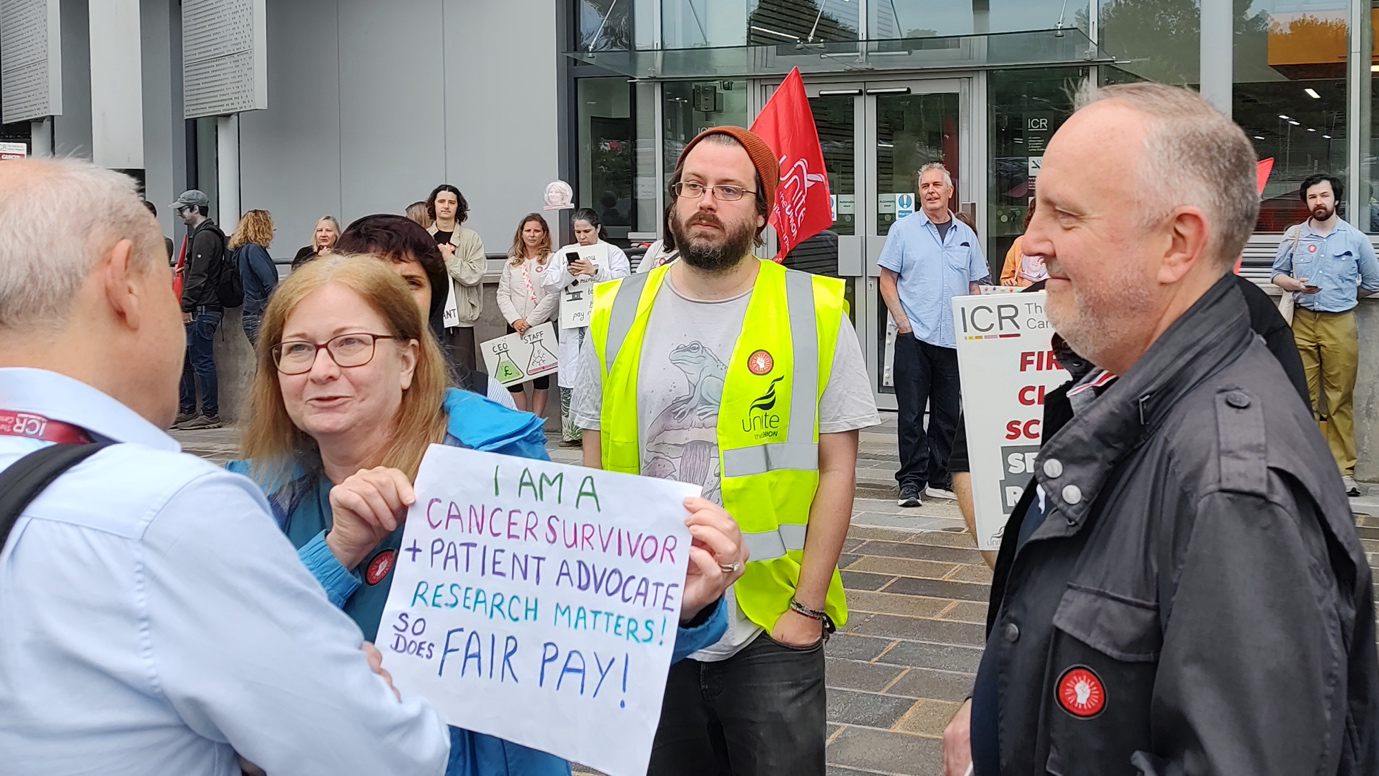
Unite the Union representatives for the ICR said pay negotiations have been “hostile”, claiming intentional meeting delays by management with negotiators and that the four offers they received were repurposed iterations of the first offer.
The union is calling for the incremental pay model to be reinstated to ensure staff are compensated each year based on their experience and the rising cost of living, with claims some staffers have taken on a second job to make ends meet.
Unite representative Aiden Doyle, 37, a higher scientific officer at the ICR’s Children’s Brain Tumour Centre of Excellence, told the Press Association that if it was not for a promotion he received he would have to sell his flat and start renting again.
He said: “All the meetings have been very hostile.
“We’ve been on strike for six weeks now. This is an existential crisis. There’s no respect.
“(My wife and I) don’t live lavish lives. We keep our outgoings low, so that we can do things like cancer research. But it does come a snapping point, and we’ve hit that definitely.
“If it wasn’t for my promotion I don’t think we’d have been able to continue (paying our mortgage). We probably would have had to sell and start renting.”
Industrial action began on June 3, has been extended twice and is currently set to end on August 7.
The union is asking for incremental pay scales, pay restoration and for pensions to be protected – the latter of which has been agreed on.
A drug discovery scientist at the ICR, who wished to remain anonymous, said that after nearly four years at the ICR they are “getting poorer”.
The researcher added: “I am struggling to pay my bills and meet my rent. It’s not sustainable for me.”
The sentiment was echoed by another cancer researcher who has worked at the ICR for nearly seven years with the hopes of making a difference.
He said: “I didn’t get into the job because I wanted to make a fortune. I have no illusions that people get into science to get rich.
“I just assumed that every year that they put up my pay the same as what inflation was and it’s the fact that I’m actually getting poorer and poorer.
“The longer I stay there, the poorer I’ve got to the point where I can barely afford to cover all my bills now. And I’m not the only one.”
He said his mortgage payments will be “unaffordable” when rates go up, adding: “My choices are either selling or leaving a job that I love.”
Teige Matthews-Palmer, 35, an electron microscopist at the ICR and union representative, said: “People being recruited were coming in on last year or the previous year’s pay, and by doing that, people have lost out 16% against inflation. So people’s incomes are worth 16% less now.
“It’s put people in real hardship. We’ve heard colleagues say that they can’t heat and eat in our survey.
“I would say it’s very common to work more than 50 hours per week as a research scientist. Working overtime is expected and normal.”
He also claimed he has colleagues who work on the front line in logistics post rooms who have taken on cleaning jobs at the ICR in order to make ends meet.
Ciaran O’Neill, 63, has worked at the ICR for more than 40 years, including as a researcher and health and safety advisor, added that staff often work overtime and are not compensated for the extra hours.
Mr O’Neill, who is also a union representative said: “I don’t want to be on strike. A lot of us here, we work well beyond our paid hours, and the institute gains from that input because people are writing their scientific papers at home at the weekends in their own time.
“They’re working in the labs at weekends to get things done, unpaid because of their commitment to the institute, and the institute is not showing that commitment back.”
A spokesperson for the ICR said: “We respect the union’s mandate for further industrial action and recognise that this reflects strongly held concerns among members, particularly in relation to pay.
“The ICR has taken negotiations with the union over the current pay dispute very seriously and approached them in a constructive manner. So far, they have failed to reach a resolution.
“We value all our colleagues. We have been actively engaging with the union and have made an improved pay offer for 2026 and 2027 that targets support at lower-paid staff, and includes backdated pay adjustments for 2025, which will benefit many staff.
“Our offer is above inflation, as measured by the Consumer Price Index. For staff who were part of the August 2025 salary review, this would equate to at least a 12.5% salary increase over the three-year period.”
The institute added its pay was “broadly competitive” with other research organisations, adding it was currently “operating in a challenging external environment, including funding constraints and rising costs”.
The spokesperson said: “We remain fully committed to constructive, ongoing negotiations.”